Search "Hashimoto diet" and you will find a dozen conflicting lists. Cut gluten. Cut dairy. Cut nightshades. Never eat broccoli again. Take iodine. Never take iodine. It is no wonder so many people with Hashimoto's feel overwhelmed at the grocery store.
Here is my honest take. The research does not support one perfect Hashimoto's diet, and most of the strict elimination lists go further than the evidence. What helps most is adding foods that support your thyroid, your blood sugar and your immune system, then making targeted changes only where your own results point to one.
First, a quick note on Hashimoto's vs hypothyroidism
They are not the same thing. Hashimoto's is an autoimmune condition where your immune system produces antibodies against the thyroid. Hypothyroidism is the state of having low thyroid hormone, and Hashimoto's is a common cause of it. You can have Hashimoto's with a normal TSH, and that matters for food, because the goal is to calm immune activity as well as support hormone levels. If you are not sure which applies to you, a full thyroid panel with antibodies will show it.
Does gluten matter in Hashimoto's?
It depends on who you ask and, more usefully, on who you are. Celiac disease is more common in people with autoimmune thyroid disease, so it is worth being screened with a blood test before you remove gluten (Sategna-Guidetti et al., 2001). If you have celiac disease, gluten needs to go.
For everyone else, the evidence is thinner. One small pilot study in women with Hashimoto's who also had celiac-related (tTG) antibodies found that a gluten-free diet lowered thyroid antibody levels (Krysiak et al., 2019). It was small and not blinded, so it is a signal, not a rule. If you wish to try gluten-free, do it as a time-limited experiment, keep eating enough protein and fibre, and re-test your antibodies so you know whether it was worth it. Do not do it permanently on a hunch.
Selenium: a well-studied nutrient in Hashimoto's
Selenium helps your thyroid make and convert hormone, and it protects thyroid tissue from oxidative stress. A meta-analysis found selenium supplementation lowered thyroid antibodies in people with Hashimoto's after three months, although the effect on symptoms and long-term outcomes is less clear (Toulis et al., 2010; Winther et al., 2020).
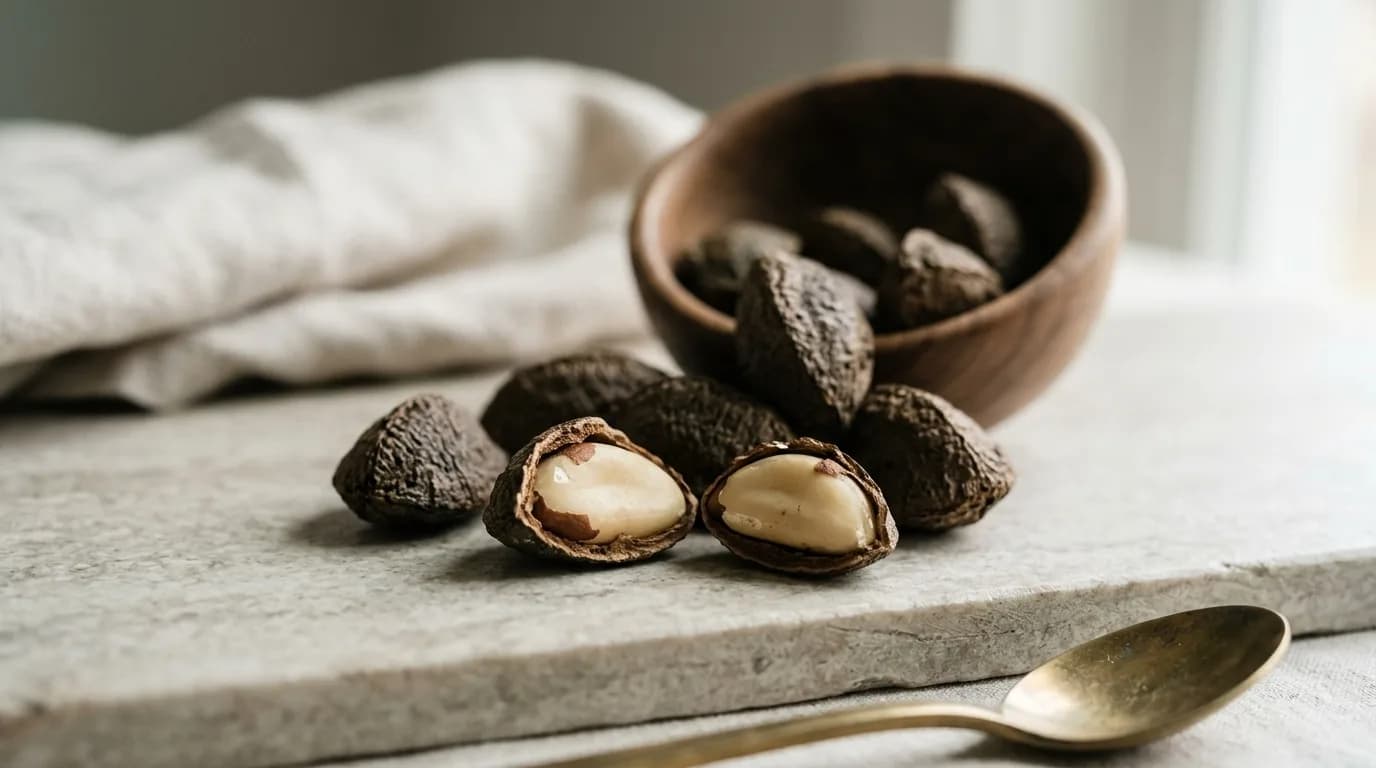
Food comes first. Brazil nuts are the best known source, and one or two a day is often enough for many people. Selenium content in nuts varies widely depending on the soil they grew in. Fish, eggs, poultry and mushrooms also contribute. Too much selenium is not harmless, and Health Canada sets an upper limit of 400 mcg a day from all sources, so check before you add a supplement on top of the nuts.
Iodine: a narrow sweet spot
Your thyroid needs iodine to make hormone. In Hashimoto's, though, more is not better. In susceptible people, excess iodine can aggravate thyroid autoimmunity (Luo et al., 2014). That is why I tend to steer people away from kelp tablets and high-dose iodine supplements, and toward the amounts you get from food: iodized table salt, dairy, eggs and fish. If you eat seaweed every day or take a multivitamin with a high iodine dose, it is worth reviewing with your care team.
Goitrogens: broccoli is not the enemy
Goitrogens are compounds in foods like broccoli, kale, cabbage and cauliflower that can interfere with iodine uptake in very high amounts. The amounts in normal servings of cooked vegetables are not a problem for most people, and these vegetables bring fibre and protective plant compounds you do want (Felker et al., 2016). Cooking reduces goitrogens further. This is one of the most overcautious pieces of advice out there, and I would not cut these foods.
What about the AIP diet and other elimination plans?
The autoimmune protocol (AIP) removes a long list of foods, including grains, dairy, eggs, nightshades and nuts. Some people feel better on it, and a reduction in symptoms has been reported in small studies, but the research in Hashimoto's is limited and the plan is hard to follow (Ihnatowicz et al., 2020). A long elimination list can also leave you short on protein, fibre and the very nutrients your thyroid needs.
I prefer to work the other way around. Start by adding, then remove only what your symptoms or testing point to, and always with a plan to bring foods back in.
Want a plan built around your labs and your life? Book a free consult and we can talk through where to start.
What to add: a thyroid-friendly plate
Here is the pattern I use as a starting point:
- Protein at every meal. Aim for a palm or two of eggs, fish, poultry, tofu, legumes or Greek yogurt. Protein supports hormone transport, muscle and steady blood sugar.
- Fibre and colour. Vegetables, berries, beans, lentils, oats and seeds feed your gut bacteria and slow the glucose rise after meals.
- Selenium-rich foods. Brazil nuts, fish, eggs and mushrooms.
- Omega-3 fats. Salmon, sardines, trout, walnuts, flax and chia.
- Zinc and iron foods. Pumpkin seeds, shellfish, beef, lentils and leafy greens. Low ferritin is common in thyroid conditions, and our low ferritin and IV iron post explains why it matters.
- Fermented foods. Plain yogurt, kefir, sauerkraut and kimchi, if you tolerate them.
Blood sugar is a big piece of this. Insulin resistance often travels with thyroid conditions, and fasting insulin is rarely run by family doctors. If you are tired after meals or craving sugar by mid-afternoon, it is worth asking about.
Medication timing still matters
If you take levothyroxine, food, coffee, calcium, iron and some supplements can interfere with absorption. Your prescriber or pharmacist can tell you the timing that fits your routine. Please do not change your dose on your own. Our levothyroxine side effects post covers what to watch for.
Diet is one part of a bigger picture
Food supports your thyroid, but it does not replace thyroid care. If you are still wondering what is driving your immune system, our post on what is really happening in Hashimoto's goes beyond the antibody story. Our Hashimoto's and hypothyroidism page shows how we look at the whole person.
Does OHIP cover this kind of support?
Naturopathic care is not covered by OHIP, which is a real consideration. The upside is time: longer visits, a close look at your labs, and a plan built around your life instead of a generic handout. We direct bill most insurers, so check your extended health benefits, since many plans cover naturopathic visits. If you want to see what is included, our thyroid health page is a good place to start.
The bottom line
There is no single Hashimoto's diet. The best-supported steps are screening for celiac disease, getting enough selenium from food, keeping iodine at food levels, and building every meal around protein, fibre and colour. Skip the scare lists about broccoli, and use elimination only as a short, tested experiment. Add first, remove only when you have a reason.