Could what's on your plate actually change your risk of breast cancer? It's a fair question, and there's real research behind it.
In the PREDIMED trial, researchers followed women assigned to different dietary patterns over time. The group following a Mediterranean diet enriched with extra-virgin olive oil showed a substantially lower risk of invasive breast cancer compared to a lower-fat comparison diet.
This isn't a vague "eat healthy" finding. It's a specific dietary pattern, studied directly against breast cancer risk, with a result worth paying attention to.
What does the Mediterranean diet actually involve?
It's a specific, well-defined eating pattern, not a loose interpretation of "healthy eating." It centers on:
- Vegetables and fruit
- Legumes (beans, lentils)
- Whole grains
- Nuts
- Fish
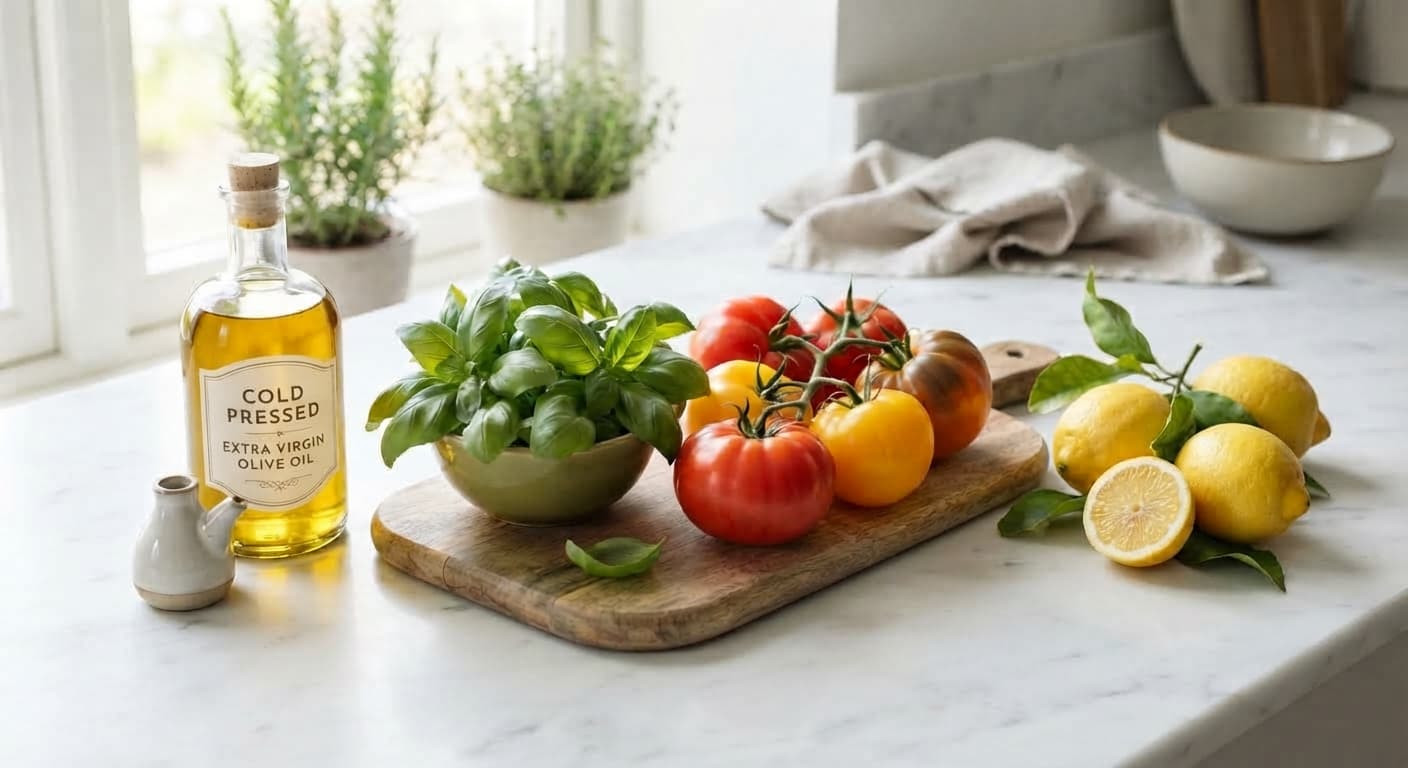
- Generous use of cold pressed extra-virgin olive oil
Alongside that, it keeps processed meat, highly processed foods, added sugar, and excess alcohol lower than a typical Western dietary pattern.
Is this the only study showing this connection?
No. The PREDIMED findings aren't an isolated result — other research has pointed toward a similar association between this dietary pattern and breast cancer risk, which adds meaningful weight to the finding rather than leaving it as a single study to interpret cautiously.
Why might this dietary pattern actually matter for cancer risk?
The proposed mechanisms aren't mysterious. This eating pattern is associated with reduced inflammation, better insulin sensitivity, improved metabolic health, and a substantial intake of protective plant compounds, including the polyphenols concentrated in extra-virgin olive oil specifically. Chronic inflammation and metabolic dysfunction are both implicated in cancer risk more broadly, which gives a plausible biological explanation for what the research is showing.
Does this still matter after a breast cancer diagnosis?
Yes, and this part is worth emphasizing. This conversation isn't only about prevention. For people who have already had breast cancer, this dietary pattern remains relevant to cardiovascular health, metabolic health, energy levels, and overall wellbeing during and after treatment. The benefits of eating this way extend well past cancer risk alone.
Do you have to do it perfectly?
No. This is a pattern to build toward consistently, not a rigid set of rules to follow flawlessly. More plants, more olive oil, more whole foods, applied consistently over time, is what the research is actually pointing to — not an all-or-nothing standard that's hard to sustain.
The bottom line
The Mediterranean diet, specifically enriched with extra-virgin olive oil, has real research behind it as a factor associated with lower invasive breast cancer risk — and its benefits reach well beyond cancer alone. Consistency, not perfection, is what actually makes this pattern useful in real life.