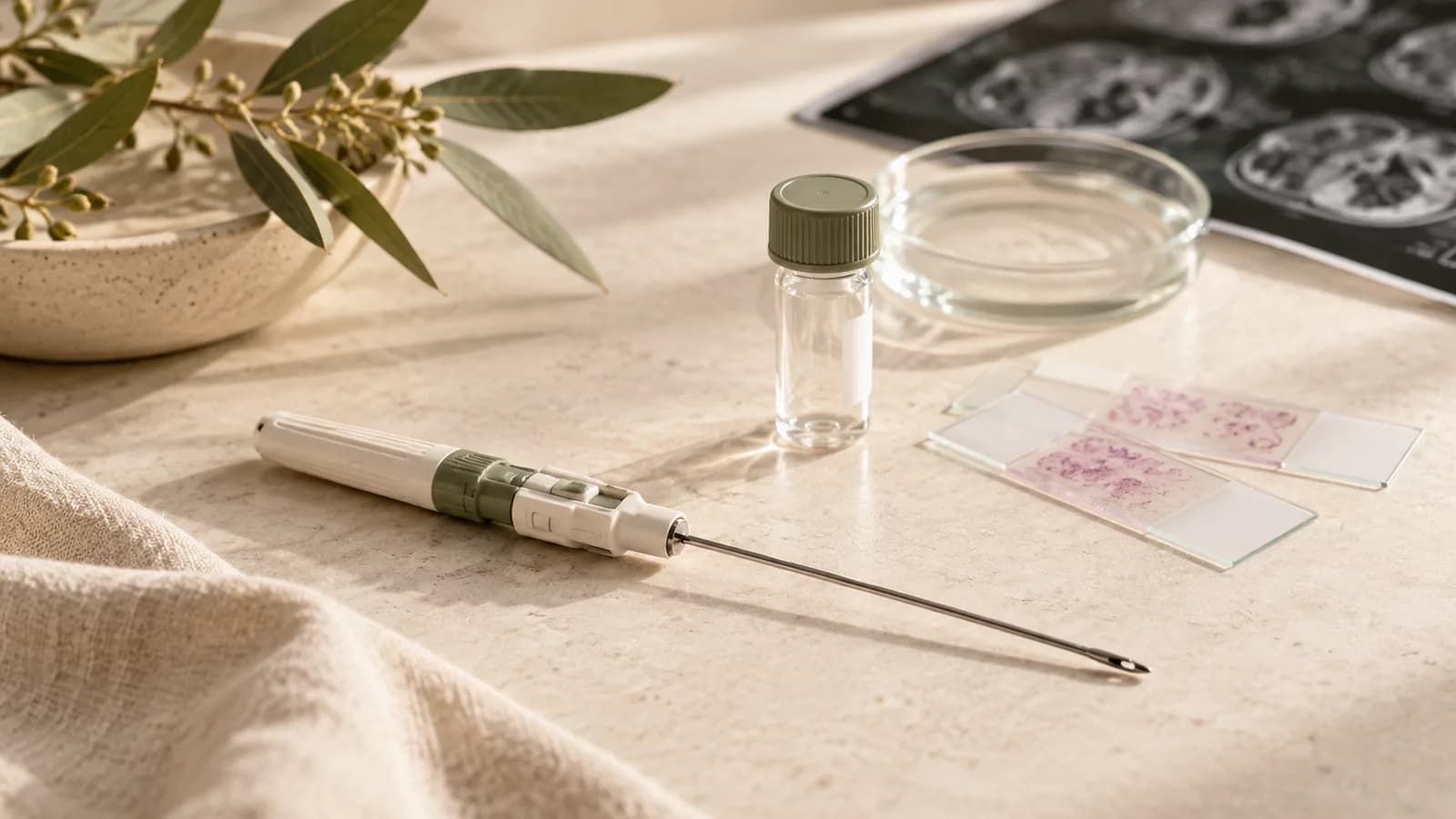
This question comes up constantly with patients facing a possible cancer diagnosis, and it's completely understandable why. You're already carrying the weight of a possible diagnosis. Hearing that the test needed to confirm it might somehow make things worse is a frightening thing to sit with.
So it's worth answering directly, with the actual evidence, rather than the fear alone.
The goal isn't to pretend a biopsy carries zero risk. It's to understand how that small risk compares to the risk of not knowing what you're dealing with.
Can biopsy needle actually move cancer cells?
In a technical sense, yes, it's possible. As a biopsy needle passes through tissue, it can occasionally carry a small number of cells along its path. This is a real, documented phenomenon.
Does that mean the cancer has "spread"?
This is the important distinction. A handful of displaced cells along a needle track is not the same thing as the cancer spreading through the body. Most of those cells don't survive. When researchers look at actual patient outcomes, biopsies have not been shown to worsen survival in common cancers like breast cancer.
True tumor seeding, meaning a new, viable tumor deposit actually taking hold along the biopsy path, is extremely rare, generally described as a fraction of a percent for most biopsy procedures.
Are there exceptions?
Yes, and it's worth being upfront about that rather than overstating a blanket reassurance. Certain cancers and rarer tumor types do require extra caution, and in some of those cases, doctors may choose a different diagnostic approach specifically to minimize this risk. This is exactly the kind of nuance worth discussing directly with your care team about your specific diagnosis, rather than generalizing from cancer to cancer.
What's the alternative to getting a biopsy?
This is the part that tends to get lost in the fear. Skipping a biopsy doesn't make a suspected cancer disappear, it just delays finding out what you're actually dealing with. With cancer, later almost always means larger, more advanced, and harder to treat by the time it's caught.
For the large majority of people facing a possible diagnosis, the risk from the biopsy itself is small compared with the risk of delaying that diagnosis.
The bottom line
A biopsy is not risk-free, and it's fair to have questions about it. But for most cancers, the fear that a biopsy will spread the disease isn't supported by the evidence. Getting the answer, even a hard one, is usually the first real step toward the right treatment plan, and that clarity is worth more than the fear it can feel like in the moment.